Vinyl Siding Replacement Cost Breakdown
Cost to replace one piece of vinyl siding can vary significantly. Understanding the factors that influence this cost is crucial for homeowners. This guide explores the intricacies of material selection, labor expenses, and geographical location, providing a comprehensive overview of the entire process.
From material costs based on vinyl type and thickness to the expertise of the contractor and the complexity of the replacement job, this analysis considers all facets of the project. It also touches on the potential impact on surrounding areas, such as fascia and soffits, and offers a clear breakdown of pricing scenarios based on various factors. Ultimately, this detailed look aims to help you confidently navigate the process and make informed decisions.
Factors Influencing Cost
Source: mrhappyhouse.com
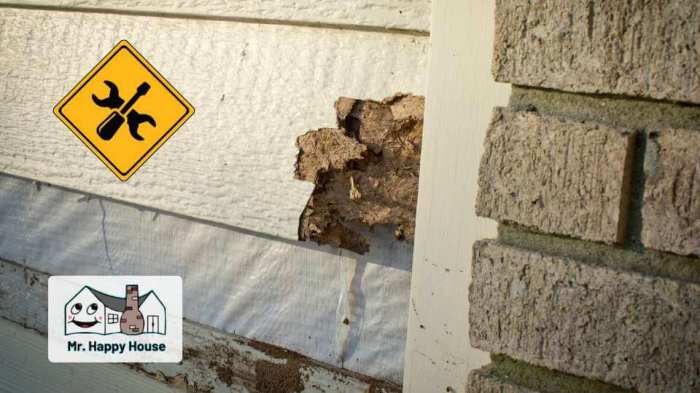
Replacing a single piece of vinyl siding can seem like a simple task, but various factors significantly impact the overall cost. These factors range from the type of vinyl used to the experience of the contractor, and the geographic location. Understanding these nuances is crucial for homeowners looking to make informed decisions.
A meticulous assessment of these elements allows homeowners to anticipate the total expense and make a more strategic approach to their project. This detailed examination encompasses material costs, labor considerations, geographical influences, and potential consequential damages. Careful evaluation ensures the replacement aligns with budget expectations and project goals.
Material Costs
Material costs play a pivotal role in the overall price of replacing a single piece of vinyl siding. The type of vinyl siding directly impacts the price. Higher-end vinyl, often featuring enhanced durability or aesthetic qualities, commands a premium. Thickness also affects the cost, as thicker vinyl generally offers better resistance to damage and weather conditions, justifying a higher price point.
- Different vinyl types exhibit varying levels of resistance to dents, scratches, and weathering. Premium vinyl, for example, might be more resistant to these issues than standard vinyl.
- Thickness directly correlates to the durability of the siding. Thicker vinyl can withstand more stress from impacts or weather fluctuations, leading to a higher material cost.
Labor Costs
Labor costs are another crucial element influencing the final price. The complexity of the replacement itself significantly impacts labor costs. A straightforward replacement of a single piece might take less time and effort than replacing a section affected by significant damage, requiring more time and potentially specialized skills. The experience level of the contractor also influences labor costs. Experienced contractors often have more efficient work processes, which can translate to lower labor costs in some cases.
- Replacing a damaged piece in isolation might be less complex than addressing a larger section of damaged siding.
- The contractor’s experience level and skillset play a substantial role. Experienced professionals typically work more efficiently, potentially leading to lower labor costs compared to less experienced contractors.
Geographic Location
Geographic location significantly affects the cost of vinyl siding replacement. Regional labor rates vary considerably across different parts of the country. In areas with a higher cost of living, labor rates are generally higher. Furthermore, material availability can influence pricing. If a particular type of vinyl siding is less readily available in a specific region, the cost might be higher due to transportation or sourcing challenges.
- Labor rates in urban areas are often higher than in rural areas, directly affecting the overall cost of the project.
- Material availability can also influence costs. If a specific type of vinyl siding is not readily available locally, the cost might increase due to transportation or import fees.
Examples of Vinyl Siding Types and Costs
Different vinyl siding types vary in their composition and features, resulting in diverse price ranges. For instance, a standard vinyl siding might cost around $5 to $10 per square foot, while a premium vinyl siding with enhanced features could cost between $10 and $15 per square foot. These figures are estimates and can vary based on the supplier and the specific features.
- Standard vinyl siding, typically offering basic protection and aesthetics, ranges in price from $5 to $10 per square foot.
- Premium vinyl siding, often with added durability and design features, could cost between $10 and $15 per square foot.
Impact of Damage to Surrounding Areas
Damage to surrounding areas like fascia or soffits can significantly increase the overall cost. If the damaged siding piece is part of a larger system, repairs or replacements to the fascia and soffits might be necessary, increasing the labor time and material expenses. This will often require specialized contractors for the added complexity and the potential for additional damages.
- If the damaged siding is part of a larger system, repairs or replacements to the fascia and soffits might be necessary, increasing the cost.
- The complexity of these repairs often requires specialized contractors, leading to higher labor costs.
Comparison of Vinyl Siding Brands
| Brand | Estimated Cost per Square Foot (USD) | Key Features |
|---|---|---|
| Brand A | $8 | Standard durability, good value |
| Brand B | $12 | Enhanced durability, superior aesthetics |
| Brand C | $10 | Good balance of durability and cost |
Note: Costs are approximate and can vary based on location, retailer, and specific features.
Estimating Replacement Costs
Source: howmuch.net
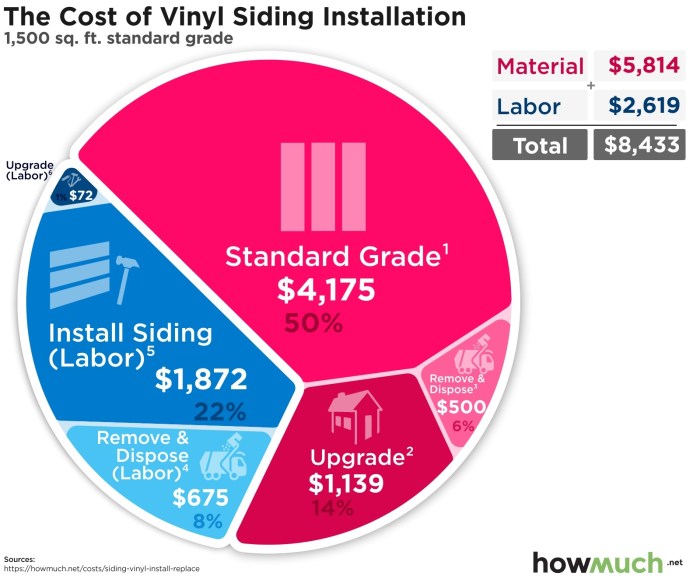
Replacing a single piece of vinyl siding, while seemingly straightforward, involves careful estimation to ensure accuracy and avoid overspending. Understanding the various factors impacting the cost, such as material quality, labor rates, and location, is crucial for a realistic budget. This section will guide you through a step-by-step process for estimating the cost.
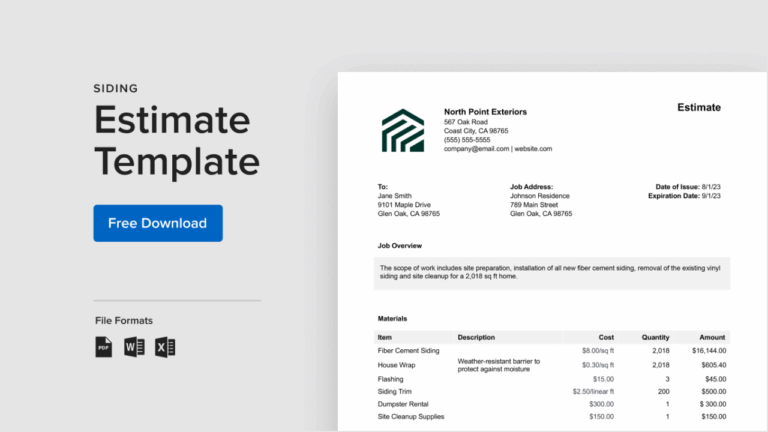
Accurately determining the cost to replace a single piece of vinyl siding requires a structured approach. This involves calculating the area needing replacement, understanding local pricing structures, and considering potential discounts or deals. Thorough research into local contractors and obtaining multiple quotes is essential for making an informed decision.
Step-by-Step Estimation Process
A methodical approach to estimating the cost is key. Begin by meticulously measuring the damaged siding piece. Note the dimensions, and if the siding has complex shapes or irregularities, make a sketch. Using the measurements, calculate the square footage of the affected area. This is a crucial step, ensuring a precise estimate. Next, research local material prices and labor rates. Consult with local contractors or online resources to gather pricing data. Incorporating these figures into a comprehensive estimate will produce a more accurate reflection of the total cost.
Calculating Affected Area
Determining the square footage of the affected area is vital for an accurate cost estimate. If the damaged piece is rectangular, simply multiply its length by its width. For irregularly shaped areas, you can divide the area into smaller, more manageable shapes (rectangles or triangles) to calculate the total area. Employing this strategy, you can accurately determine the square footage.
Pricing Scenarios
Different factors influence pricing. A table illustrating various scenarios can help visualize the cost variations.
| Factor | Description | Estimated Cost (USD) |
|---|---|---|
| Material Type | Premium vinyl siding | $15-25 per sq ft |
| Material Type | Standard vinyl siding | $10-15 per sq ft |
| Labor Rate | Experienced contractor (per hour) | $50-75 per hour |
| Labor Rate | Less experienced contractor (per hour) | $35-50 per hour |
| Location | Urban area | $15-20 per sq ft (labor) |
| Location | Rural area | $10-15 per sq ft (labor) |
Note: These are illustrative examples and actual costs may vary.
Tools and Equipment Costs
Estimating the cost of tools and equipment is a vital aspect. Consider the necessary tools for the job. Basic tools like measuring tape, a utility knife, and safety equipment are often needed. The cost of these tools is typically small compared to the overall cost of materials and labor.
Discounts and Deals
Investigate potential discounts and deals. Some suppliers or contractors may offer discounts for bulk purchases or referrals. Checking online for promotions and contacting suppliers directly is recommended.
Contractor Research and Quotes, Cost to replace one piece of vinyl siding
Researching local contractors is essential. Online reviews, recommendations from friends and family, and professional directories are helpful resources. Comparing quotes from several contractors is a wise decision. This allows you to evaluate pricing and services.
Importance of Multiple Quotes
Obtaining multiple quotes is crucial for a thorough cost comparison. Contractors may have different pricing structures, and comparing quotes ensures you’re getting the best possible value for your replacement. Consider the contractor’s experience, reputation, and services offered when making your final decision.
Contractor Selection and Negotiation
Choosing the right contractor for your vinyl siding replacement is crucial for a successful and cost-effective project. Proper contractor selection involves careful research, thorough questioning, and a clear understanding of payment terms and expectations. This process can significantly impact the final outcome, ensuring a quality installation that meets your needs and budget.
Questions to Ask Potential Contractors
Understanding the contractor’s capabilities and experience is vital. A well-prepared list of questions will help assess their reliability and professionalism. These inquiries should cover aspects such as their experience with vinyl siding, their approach to project management, and their guarantees. Key questions include:
- What is your experience level with vinyl siding installations?
- Can you provide references from previous clients for similar projects?
- What is your process for managing project timelines and ensuring timely completion?
- Do you offer any guarantees or warranties on your work?
- What is your approach to addressing potential issues or problems during the installation process?
- What is your policy for handling unforeseen circumstances or material shortages?
Contractor Types
Contractors for vinyl siding replacement can vary in specialization. General contractors, typically experienced in diverse construction tasks, often manage multiple aspects of a project. Specialized siding installers, on the other hand, possess in-depth knowledge and skills in vinyl siding installation.
- General contractors typically handle a broader scope of work, offering project management expertise but potentially having less specialized knowledge in siding installation.
- Specialized siding installers, often focusing solely on siding, demonstrate expertise in the specific techniques and materials required for a high-quality vinyl siding installation.
Key Criteria for Choosing a Reliable Contractor
Selecting a dependable contractor hinges on several factors. Considerations should include their reputation, experience, and ability to manage the project efficiently. A strong reputation often translates to positive customer experiences.
- Experience and reputation are key indicators of a reliable contractor, as evidenced by online reviews, testimonials, and referrals.
- Licensing and insurance are essential for legal compliance and protection in case of potential issues.
- Effective communication and a clear understanding of project expectations are crucial for a smooth process.
Common Contractor Payment Terms
Contractor payment terms vary. Understanding these terms is essential to manage financial expectations. A typical structure often involves a deposit, progress payments during the installation, and a final payment upon project completion.
- A common practice is a deposit upfront, followed by partial payments as the work progresses, ensuring the contractor is incentivized to complete the work and avoid issues related to the project’s completion.
- The remaining balance is typically paid upon completion and inspection of the finished work, reflecting a common understanding of payment procedures.
Negotiating Fair Prices
Negotiation is a valuable tool to obtain a fair price for the vinyl siding replacement. Researching local rates and comparing quotes from multiple contractors are crucial steps.
- Thorough research of local vinyl siding replacement costs is essential to ensure the price is fair and competitive.
- Seeking multiple quotes from different contractors helps in identifying a competitive and reasonable price.
- Highlighting your research and understanding of market prices can assist in negotiating a favorable rate.
Common Contractor Service Fees
Contractor service fees can vary depending on factors such as the project’s complexity and the contractor’s experience.
| Service | Estimated Fee Range |
|---|---|
| Site Assessment | $50-$250 |
| Material Procurement | Variable, depending on material cost |
| Installation | $5-$10 per square foot |
| Labor Costs | Variable, based on labor hours |
Importance of Written Estimates and Contracts
Formalizing the agreement with a written estimate and contract is crucial. This provides a clear understanding of the project’s scope, costs, and payment terms.
- A written estimate and contract protect both parties, outlining project specifics and responsibilities.
- Clearly defined payment terms and timelines avoid disputes and ensure transparency.
- Detailed specifications within the contract help in mitigating misunderstandings.
Additional Considerations
Replacing vinyl siding involves more than just selecting materials and choosing a contractor. Thorough planning, understanding potential issues, and navigating regulations are crucial for a smooth and successful project. This section details important considerations beyond the initial cost estimation to help homeowners make informed decisions.
Permits and Regulations
Siding replacements, especially for homes in regulated areas, often require permits and adherence to local building codes. Failure to obtain necessary permits can lead to significant delays and potential legal issues. Local municipalities have specific guidelines regarding siding materials, installation methods, and structural modifications. Checking with the local building department is essential to avoid complications.
Hidden Costs
Unforeseen expenses can arise during siding replacement. These hidden costs can stem from various factors, such as the discovery of underlying issues requiring additional repairs (e.g., damaged sheathing, rotted wood framing). Unexpected material shortages or price increases, especially if they occur during the project, can also add to the overall cost. Delays due to weather or unforeseen circumstances can also impact the budget. These are critical to consider and plan for.
Unexpected Repairs and Adjustments
During the siding removal process, underlying issues like damaged framing, moisture intrusion, or pest infestations may be uncovered. These discoveries necessitate additional repairs, potentially increasing the project’s cost and timeline. For instance, a seemingly straightforward siding replacement could unexpectedly reveal the need for roof repairs or foundation work, adding significant unforeseen expenses. Such contingencies are part of the job and should be factored in when assessing the overall project.
Warranties
Warranties are crucial to consider, covering both the materials and the installation. Siding manufacturers often offer warranties on their products, ensuring quality and performance. Similarly, contractors may offer warranties on their labor and installation. Understanding the terms, limitations, and coverage periods of these warranties is essential for addressing any potential future issues. For example, a 10-year warranty on siding may cover material defects, while a 1-year labor warranty covers installation problems. Always carefully review the specific terms.
Dispute Resolution Procedures
Contractors and homeowners may sometimes encounter disagreements during the project. Having a clear understanding of the dispute resolution procedures Artikeld in the contract is vital. This may include mediation or arbitration options to resolve conflicts professionally and efficiently. A detailed understanding of these procedures can help both parties navigate any potential disputes effectively.
Potential Risks
| Risk Category | Potential Risks | Mitigation Strategies |
|---|---|---|
| Material Defects | Issues with the quality or durability of the siding material | Verify manufacturer’s reputation and warranties; inspect materials carefully before installation |
| Installation Errors | Inadequate installation techniques that lead to premature failure or damage | Thorough research on contractor’s reputation and experience; inspections during installation |
| Unforeseen Damage | Damage to the house’s structure or other components discovered during siding removal | Comprehensive pre-removal inspections; contingency planning for additional repairs |
| Weather Delays | Delays caused by adverse weather conditions | Schedule project around expected weather patterns; consider project extensions in the contract |
| Contractor Reliability | Issues with the contractor’s performance or communication | Thorough research on the contractor; establish clear communication channels and timelines |
Document Review
Thorough review of all contracts and documents before signing is paramount. This includes detailed specifications, timelines, payment schedules, warranties, and dispute resolution procedures. Failing to understand these aspects may lead to future complications. Reviewing these documents in detail before signing prevents misunderstandings and potential problems later on. A detailed review of the documents ensures clarity and protects both parties involved.
Illustrative Scenarios: Cost To Replace One Piece Of Vinyl Siding
Replacing a single piece of vinyl siding, while seemingly straightforward, can encounter various cost fluctuations. These fluctuations stem from a complex interplay of factors, from the specific location of the damaged siding to the contractor’s experience and overhead costs. Understanding these scenarios helps homeowners make informed decisions when facing this type of repair.
Unusually High Replacement Costs
Unexpectedly high costs for replacing a single piece of siding can arise due to several factors. One scenario involves intricate architectural details or unique siding materials requiring specialized expertise. For instance, if the siding is part of a historic building with specific preservation requirements, the labor costs could be significantly elevated. Another possibility is the need for extensive preparatory work, such as removing and replacing significant portions of the surrounding siding due to damage or deterioration. Furthermore, if the damaged piece is located in a hard-to-reach area, such as high up on a multi-story building, access and scaffolding costs can add substantially to the overall price. Finally, an unforeseen issue like concealed water damage beneath the siding could necessitate further repairs, escalating the project’s scope and cost.
Lower-Than-Expected Replacement Costs
Lower-than-expected costs can be attributed to a number of fortuitous circumstances. If the damaged siding is a standard material in a readily accessible location, the labor costs are naturally lower. Another contributing factor is the availability of discounted materials during off-peak seasons or special promotions. Furthermore, if the homeowner has already done preparatory work, like acquiring materials or providing access, it can reduce the contractor’s overhead costs. A skilled and efficient contractor who understands the job well might also offer a lower quote. A contractor working with a lower overhead might also result in lower cost.
Factors Affecting Replacement Costs
Several factors can influence the cost of replacing a single piece of vinyl siding. The complexity of the siding design can be a factor. A uniquely designed or unusually large piece of siding might need more time and specialized tools. Geographical location plays a role. Labor costs and material availability can vary considerably across different regions. The type of siding material also affects the cost. High-end or specialized siding materials are naturally more expensive. Furthermore, the condition of the surrounding siding and the presence of any underlying issues could lead to extra costs.
Importance of Comparing Quotes
Comparing quotes is crucial for obtaining the most competitive price. Homeowners should request detailed estimates from multiple contractors, including a breakdown of labor costs, material costs, and any additional charges. These estimates should include the specifics of the job, including the exact location and extent of the damage. Comparing quotes allows homeowners to identify potential discrepancies or inconsistencies in pricing, which can alert them to potential issues or hidden costs. A careful comparison can uncover contractors who are significantly more expensive than others, allowing the homeowner to negotiate a better price.
Misleading Estimates
A misleading estimate can be provided by a contractor who intentionally or unintentionally understates labor costs, overestimates material costs, or neglects to account for additional work. Sometimes, contractors may present a seemingly low estimate to secure the job and then tack on extra charges later. Therefore, it is important to thoroughly scrutinize every aspect of the estimate, including hidden fees, additional charges, and contingencies. The presence of hidden costs can greatly increase the final price of the job. Be wary of contractors who do not provide detailed breakdowns or are hesitant to discuss the scope of work in detail.
Cost Comparison Table
This table illustrates the varying costs of replacing a single piece of vinyl siding across different scenarios. The factors considered in each scenario affect the overall cost.
| Scenario | Material Cost | Labor Cost | Total Cost |
|---|---|---|---|
| Standard Siding, Accessible Location | $25 | $75 | $100 |
| Complex Architectural Detail | $50 | $150 | $200 |
| Damaged Siding Requires Extensive Prep Work | $35 | $125 | $160 |
| High-End Siding Material | $75 | $100 | $175 |
Thorough Research and Preparation
Thorough research and preparation are essential before engaging a contractor. Researching local contractors, their experience, and reputation can save time and money. Gather necessary information about the damage, including photographs and detailed descriptions. This helps in getting accurate estimates. Knowing the specifics of the job helps to avoid misunderstandings and unexpected charges.
Ultimate Conclusion
Replacing a single piece of vinyl siding, while seemingly simple, can involve a multitude of factors influencing the final cost. Careful consideration of material choices, contractor expertise, and regional variations is key. This comprehensive guide provides a structured approach to estimating costs, selecting reliable contractors, and understanding potential risks and hidden costs. By following these steps, homeowners can make informed decisions and ensure a smooth and cost-effective replacement process.